Proposed Changes by the Ministry of Labour and Social Affairs Regarding Platform Work and Pay Transparency

scale(8.33333)%22%3E%3CclipPath%20id=%22a%22%3E%3Cpath%20d=%22M0%200h56.693v56.693H0z%22/%3E%3C/clipPath%3E%3Cg%20clip-path=%22url(%23a)%22%3E%3Cpath%20d=%22M28.346.0C12.795.0-.001%2012.796-.001%2028.347s12.796%2028.347%2028.347%2028.347%2028.347-12.796%2028.347-28.347C56.676%2012.803%2043.89.017%2028.346.0m-9.259%2042.735h-6.448V22.3h6.448zM15.7%2019.748h-.046A3.583%203.583.0%200111.8%2016.206c0-2.018%201.558-3.547%203.939-3.547q.156-.014.312-.014a3.6%203.6.0%20013.581%203.555c0%201.98-1.51%203.548-3.934%203.548m29.19%2022.987h-7.312V32.162c0-2.767-1.144-4.657-3.659-4.657a3.7%203.7.0%2000-3.492%202.5%204.7%204.7.0%2000-.157%201.67v11.06h-7.244s.093-18.729.0-20.432h7.244v3.207c.428-1.4%202.743-3.4%206.437-3.4%204.582.0%208.183%202.939%208.183%209.267z%22%20style=%22fill:%238a959b;fill-rule:nonzero%22/%3E%3C/g%3E%3C/g%3E%3C/svg%3E)
%22%3E%3Cpath%20d=%22M12.12%201.176c5.846.0%2010.591%204.615%2010.591%2010.299.0%205.683-4.745%2010.298-10.591%2010.298-5.845.0-10.591-4.615-10.591-10.298.0-5.684%204.746-10.299%2010.591-10.299zM6.331%2017.264H17.91C18.308%2017.264%2018.649%2017.123%2018.932%2016.839%2019.216%2016.556%2019.358%2016.215%2019.358%2015.817V7.132C19.358%206.734%2019.216%206.394%2018.932%206.11%2018.649%205.827%2018.308%205.685%2017.91%205.685H6.331C5.932%205.685%205.592%205.827%205.308%206.11c-.283.284-.425.624-.425%201.022v8.685c0%20.398.142.739000000000001.425%201.022C5.592%2017.123%205.932%2017.264%206.331%2017.264zm0-8.684%205.789%203.618L17.91%208.58v7.237H6.331V8.58zm0-1.448H17.91l-5.79%203.619L6.331%207.132z%22%20style=%22fill:%238a959b%22/%3E%3C/g%3E%3C/svg%3E)
In mid-March 2026, the Ministry of Labour and Social Affairs (MPSV) presented proposals for two acts that will bring significant changes for employers, digital platforms, and self-employed persons. These proposals introduce new rules for platform work and transpose the Pay Transparency Directive.
Our law firm now provides you with a clear summary of the proposed changes:
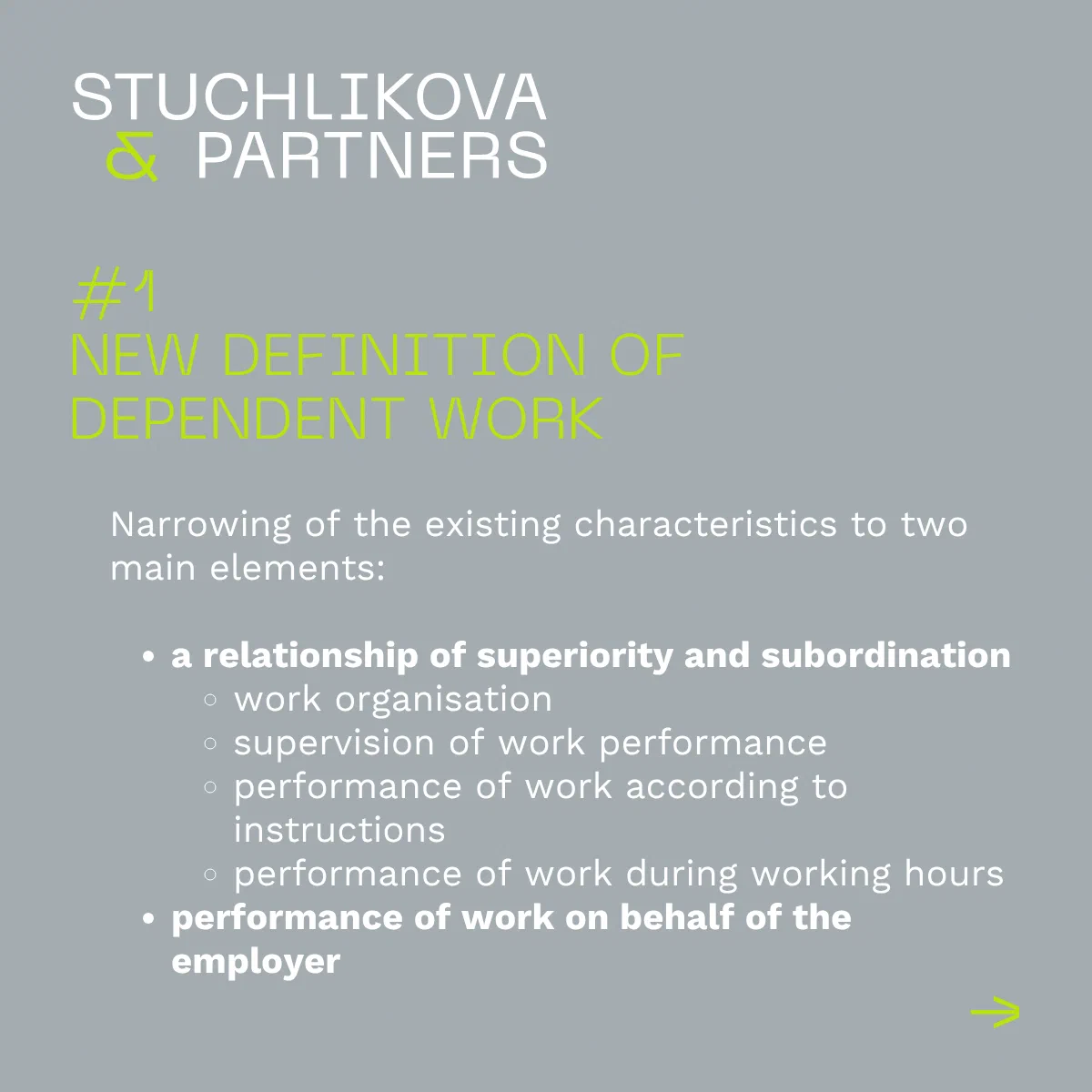
#1 – New Definition of Dependent Work
The draft Platform Work Act (ZOPP) is intended to amend the definition of dependent work in the Labour Code. Its impact would therefore not be limited solely to digital platforms.
The existing characteristics of dependent work are to be narrowed from four to two main elements: a relationship of superiority and subordination, and the performance of work on behalf of the employer. Superiority and subordination are to be further assessed based on four sub-elements: work organisation, supervision of work performance, performance of work according to instructions, and performance of work during working hours.
In practice, working hours in particular may become one of the key distinguishing factors between dependent work and genuinely independent cooperation. The personal performance of work is to cease being a defining element of dependent work. Under the proposal, providing benefits to self-employed persons should not, in itself, lead to reclassification, provided that the defining elements of dependent work are not met.
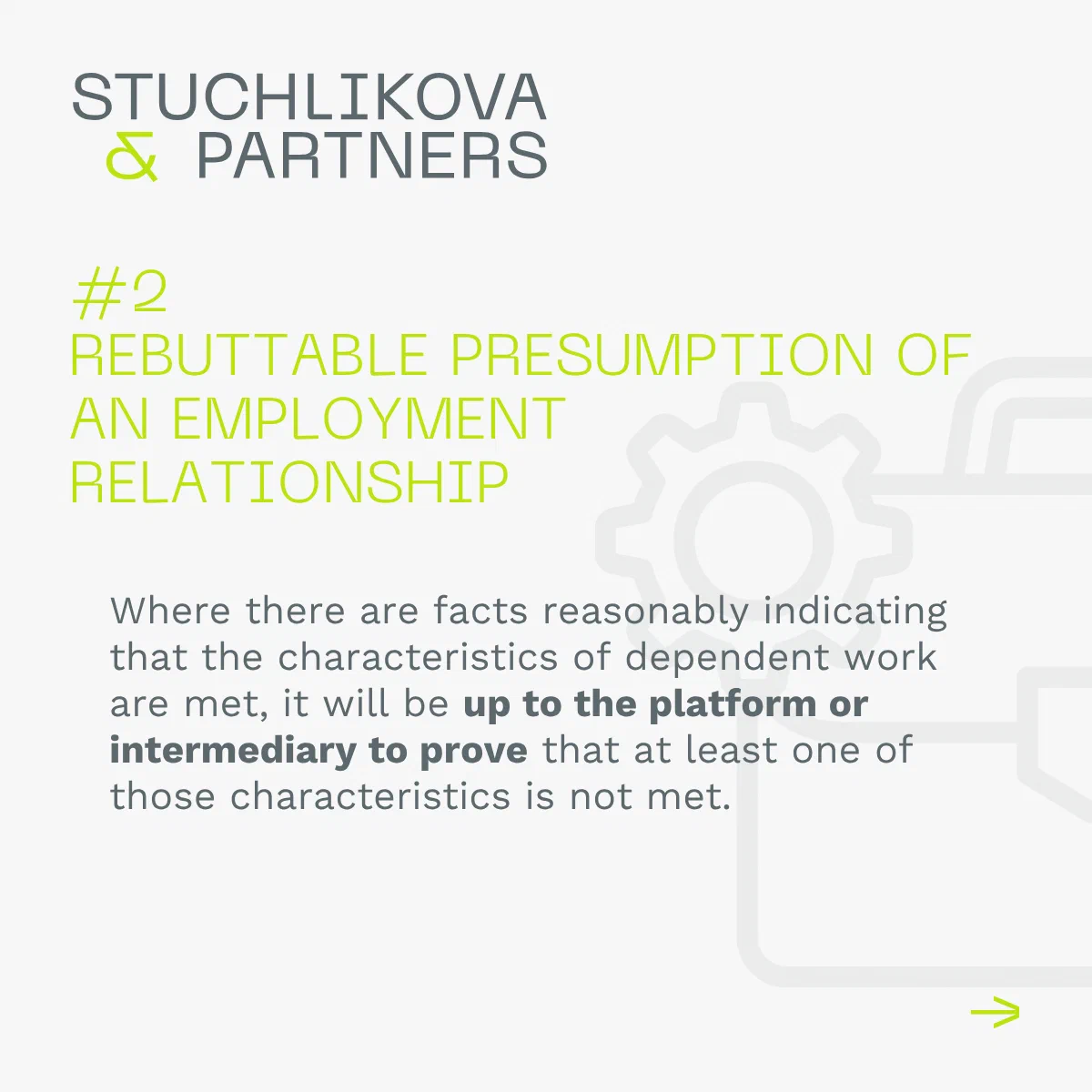
#2 – Rebuttable Presumption of an Employment Relationship
A rebuttable presumption of the existence of a basic employment relationship is to be introduced for platform work.
Where there are facts reasonably indicating that the characteristics of dependent work are met, it will be up to the platform or intermediary to prove that at least one of those characteristics is not met.
This may significantly tighten the position of models based on self-employed persons where the factual setup of the cooperation corresponds to employment.
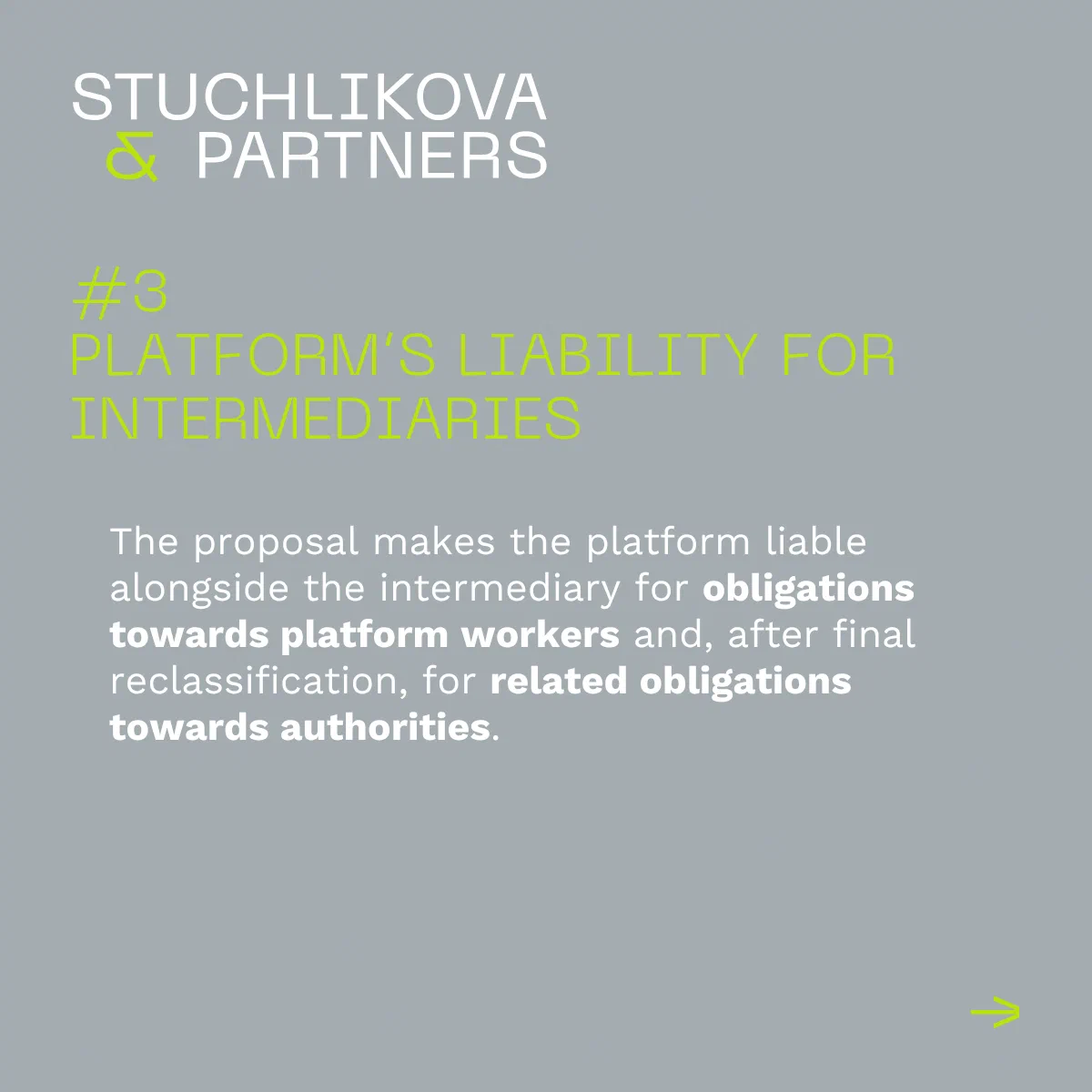
#3 – Platform’s Liability for Intermediaries
Under the proposal, the platform is to be jointly and severally liable with the intermediary for compliance with obligations under the Platform Work Act towards platform workers who have a contractual relationship with the intermediary.
Separately, the platform is to be liable for ensuring that, following a final and binding reclassification, the intermediary fulfils the related obligations towards administrative authorities. A breach of this obligation may result in a fine of up to CZK 3 million. A release from liability is proposed only for this regime and requires proof that “all efforts” were made.
In practice, it will be essential to contractually address the intermediary’s information obligations, cooperation, control mechanisms, contractual penalties, and recourse claims.
#4 – Transparency and Human Oversight of Algorithmic Management
The proposal introduces rules on transparency in algorithmic management and human oversight of automated systems, particularly in relation to work allocation, performance assessment, remuneration, and termination of cooperation.
For the most serious decisions, such as termination of the contractual relationship, restriction or cancellation of an account, or non-payment of remuneration, purely automated decision-making is to be excluded. Platform workers are to have the right to an explanation and human review.
Before commencing the processing of data by automated systems, it will be necessary to carry out a DPIA. However, the new rules on informing and consulting on the introduction of automated systems are not intended to apply only to platforms. Under the proposal, they will also generally apply to employers using automated systems, typically, for example, in warehouses, logistics, or call centres.
#5 – In Parallel: Pay Transparency
The forthcoming transposition of the Pay Transparency Directive is expected to introduce, in particular:
- a ban on asking job applicants about their salary history,
- an obligation to disclose the offered salary range in advance,
- requirements for an objective and non-discriminatory remuneration system,
- gradual reporting of pay gaps between women and men according to employer size:
- from 2028, employers with 150 or more employees,
- from 2031, employers with 100–149 employees,
- employers below the threshold of 100 employees will not be required to prepare mandatory reporting.
Effective Date
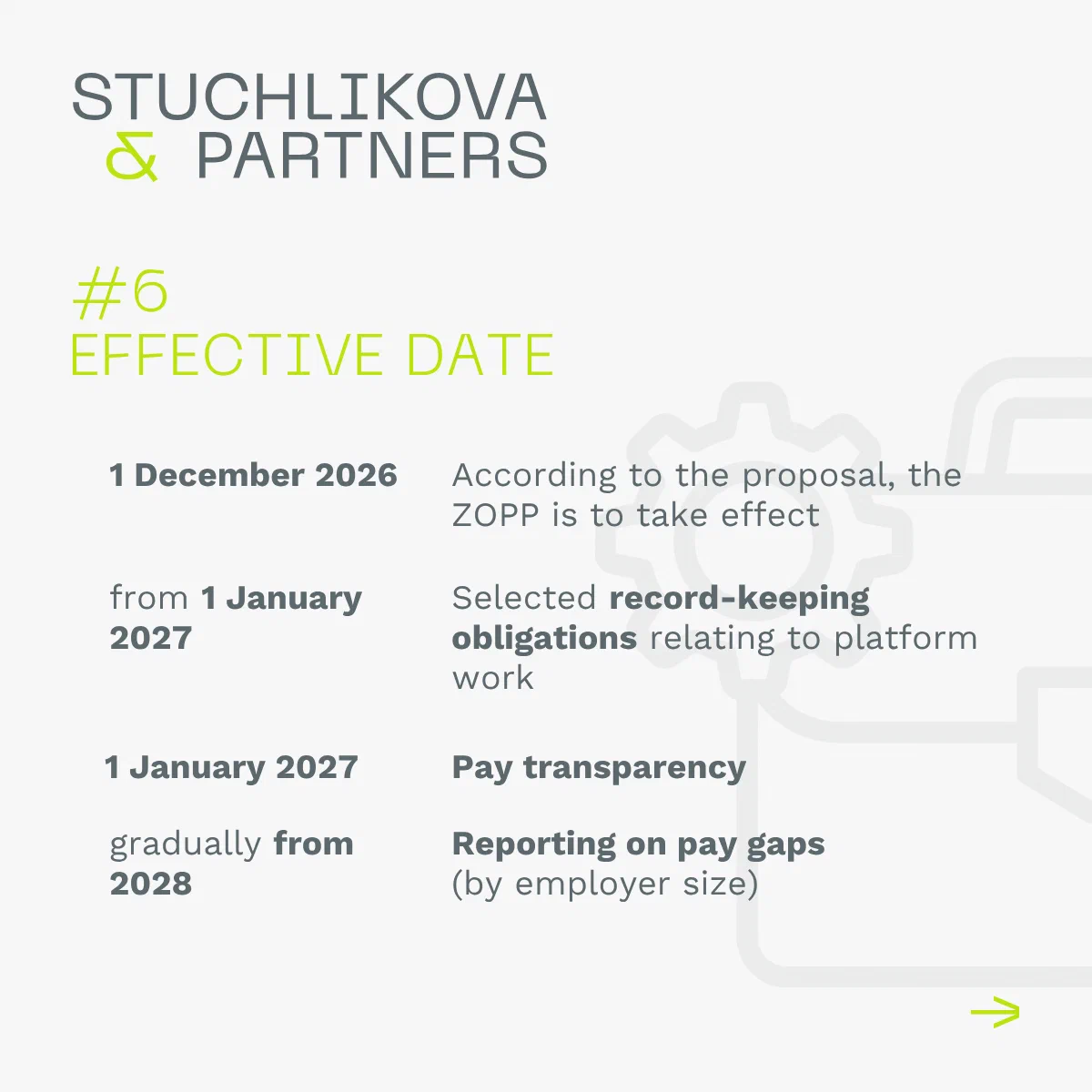
Under the proposal, the Platform Work Act is to take effect on 1 December 2026; selected record-keeping obligations relating to platform work are to follow from 1 January 2027.
As regards pay transparency, the basic effective date is expected to be 1 January 2027, while reporting on pay gaps is to be phased in gradually according to employer size.
You can view the full text of the Ministry of Labour and Social Affairs, including the presentation on the proposed changes, here.
Should you be interested in our services in the field of employment law, please do not hesitate to contact us at info@stuchlikova.com and arrange a non-binding initial consultation.