MiCA two years on: what the CNB finds wrong with CASP license applications


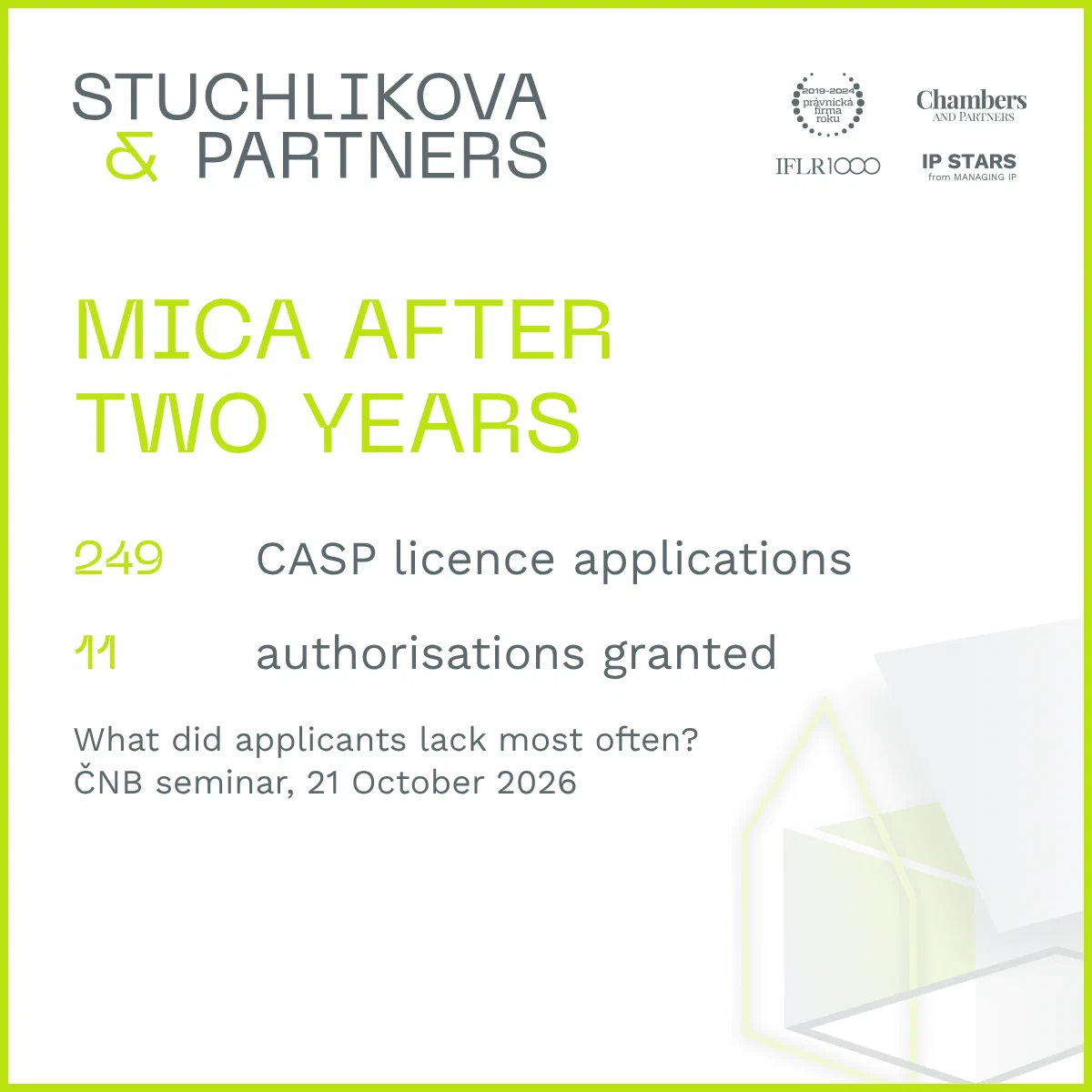
The CNB has reviewed the first two years of MiCA. Of 249 CASP license applications, it granted only 11 authorizations by 1 July 2026.
At the seminar “Crypto-asset regulation in practice: the first two years of MiCA” on 21 October 2026, the CNB showed in detail for the first time how the licensing wave turned out. By 31 July 2025, the last day for using the transitional period, it received 210 applications, 128 of them on a single day. In total, it assessed 249 applications for authorization. In 161 cases, it discontinued the procedure because the applicants did not provide the missing information. Eleven firms obtained authorization.
Why applications failed
According to the CNB, most applications had defects that prevented a substantive assessment. The most common were:
- generic or mutually inconsistent documentation, missing Czech translations and attempts to complete documents only during the procedure,
- an unclear place of effective management, for example at firms that were only just moving to the Czech Republic,
- vaguely defined services and a non-transparent business model,
- insufficient evidence of capital and its origin,
- missing information on management and on holders of qualifying holdings.
What the CNB sees after granting a license
- 80% of licensed providers do not even reach the stress scenarios of the business plans they submitted in the procedure.
- The error rate in reports to the CNB fell from 83% to 39% between 31 March and 30 June 2026 but, according to the CNB, is still below the standard usual in sectors that have been regulated for longer.
- Shortly after a license is granted, management, responsible persons, capital and the business model often change. The stability declared in the procedure has not been borne out in practice.
What this means
Anyone still considering a CASP license needs an application that the CNB can assess on the merits the first time: documentation written for the specific business model, in Czech and consistent throughout, evidenced capital and a realistic business plan. Our guide to the CASP license under MiCA sets out the procedure step by step.
We can help you prepare the application and handle the CNB procedure. Contact us at info@stuchlikova.com.
Source: CNB, seminar “Crypto-asset regulation in practice: the first two years of MiCA” (in Czech)